


We have put a map of the Shrine after the text.
Now we’re at the place where the old entrance way and porter’s lodge used to be situated, in a low, single-storey building leading into the convent grounds. This is where Sister Faustina worked for a few months in the last year of her life and where Jesus visited her in the guise of a poor young man. The porter’s lodge was next to the main entrance gate in the perimeter wall that enclosed the entire property, which was private and used exclusively by the Congregation of the Sisters of Our Lady of Mercy and the girls in their care. There was a large inscription on the entrance gate which read “Józefów” (St. Joseph’s), because the Community had St. Joseph to thank for the Łagiewniki foundation and considered him the master of the house. The convent and its subsidiary buildings was designed in a Neo-Gothic style by Karol Zaremba and founded by the financier and philanthropist Prince Aleksander Lubomirski. The Founder’s intention was to establish an institution for women and girls who wanted to transform their life by repentance and self-improvement in order to return to an honest lifestyle.
Mercy House (Dom Miłosierdzia), the east wing of the convent buildings, was reserved for apostolic work and accommodated 100-160 “charges” in the Congregation’s care. Originally, the charges were women who wanted to change their lives and made their own decision to live in the house. Later, the Community started to take younger girls as well, sent by their parents or welfare authorities. The life of the Sisters and their charges was full of prayer, work, and a well-organised leisure agenda. The main incentives the Sisters relied on in their educational work were grounded in the faith, respect for human dignity and the individual’s freedom. Work was another important educational instrument: not only did it provide the girls with an income but it also fostered the Christian virtues and helped in the development of their characters.
Residents as well as anyone who came to the convent on business of any kind had to pass through the entrance gate and report at the porter’s lodge. Sister Faustina arrived for the first time in January 1926, when she was still Helena Kowalska, to complete her postulancy and conduct her two years in the novitiate. When it was over, she spent another six months at Łagiewniki and later came on several occasions for retreats, and in April and May 1933 for her solemn vows. Finally, she returned in May 1936 for permanent residence here. In September 1937 she was put on porter’s duty here and continued in the job for several months. She used to see a Cherub standing on guard over the entrance gate, and one day in the autumn of 1937 Jesus came up to the entrance gate to visit her in the guise of a poor young man. He was wearing dreadfully tattered clothes, barefoot and without a hat; he was freezing, as it was a cold and wet day. He asked for something hot to eat and when he had finished his meal, He let her recognise Him and said, “The blessings uttered by the poor as they leave your gate have reached My ears . . . so I descended from My throne to taste the fruit of your mercy.” (Diary 1312)
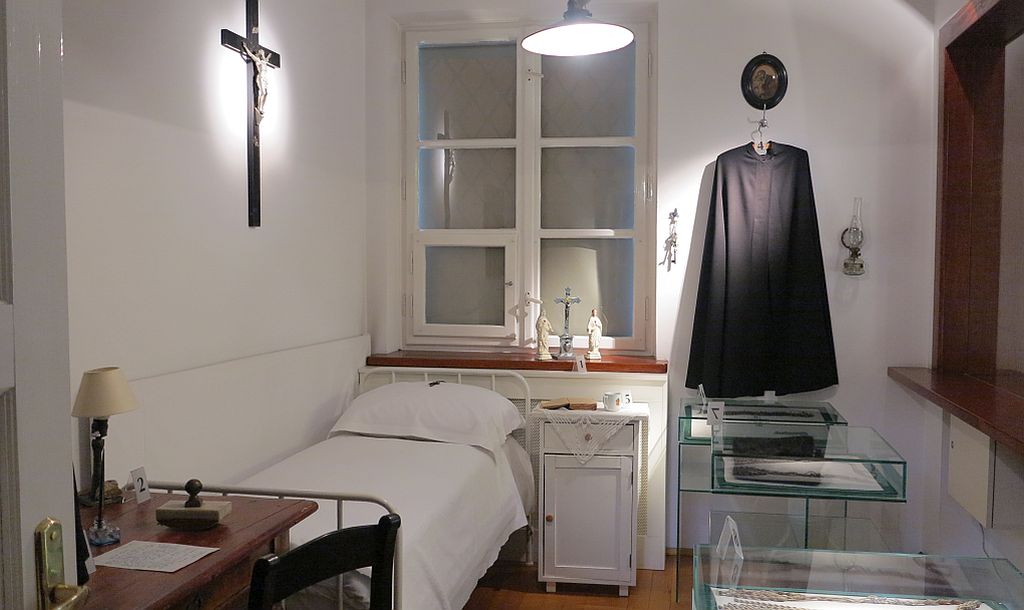
There is a bas-relief commemorating the event in the hall of the building which was later put up on the site of the old porter’s lodge. The new building accommodates Sister Faustina’s House with guest rooms for pilgrims and persons who come to make a retreat here. Next to the reception hall there is a replica of a convent cell with a small exhibition of items which used to belong to Sister Faustina, such as the little altar she brought from her family home, the lamp she used when she was writing up entries in her diary in Vilnius, the beaker she used from the Łagiewniki refectory, her cape, and other items of everyday use. Actually, only the superior had a private room to herself; all the other Sisters shared a large dormitory with individual sleeping quarters separated off from one another with canvas screens.
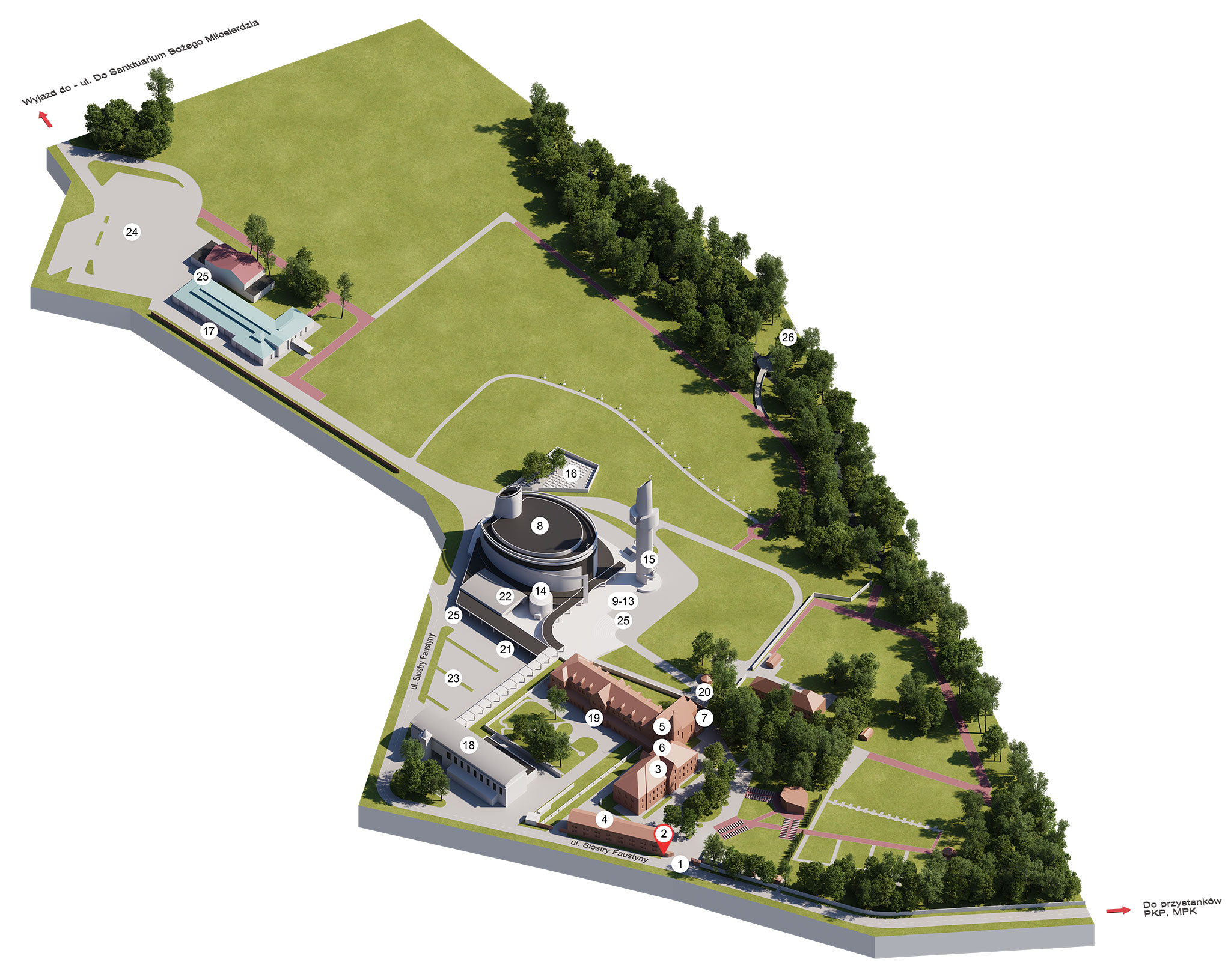
- Main entrance to the Shrine
- Sister Faustina’s House: hotel & museum
- Convent
- Antoninek House: Faustinum Association
-
Merciful Jesus Chapel & Saint Faustina’s Tomb: Heart of the Shrine
- Oratory: room where Saint Faustina died
- Chapel of the Lord’s Passion
- Divine Mercy Basilica
- Saint Faustina’s Chapel
- The Communio Sanctorum Chapel
- Saint Andrew’s Chapel
- The Holy Cross Chapel
- The Chapel of Our Lady of the Seven Sorrows
- Perpetual Adoration Chapel
- Viewing Tower
- Convent Graveyard
- Sister Faustina’s House: restaurant, souvenirs & meeting hall
- Pastoral Lodge: hotel & restaurant
- Mercy House
- Information Booth
- Souvenirs & Misericordia Bookshop
- Saint John Paul II Hall
- Car park
- Car and coach park
- Toilets
- Bridge of Mercy, for the Saint John Paul II Shrine & tram stop